Menu
Context
Ummanité is an NGO that, since 2011, has been carrying out solidarity actions with a positive impact by combining volunteer engagement and local initiatives, with the mission to give, transmit, and grow together. Their website encountered several points of friction:
Lack of clarity in the message conveyed.
Confusing navigation.
Branding that does not stand out (tone, message, colors, personality).
Ummanité is an NGO that, since 2011, has been carrying out solidarity actions with a positive impact by combining volunteer engagement and local initiatives, with the mission to give, transmit, and grow together. Their website encountered several points of friction:
Lack of clarity in the message conveyed.
Confusing navigation.
Branding that does not stand out (tone, message, colors, personality).
Ummanité is an NGO that, since 2011, has been carrying out solidarity actions with a positive impact by combining volunteer engagement and local initiatives, with the mission to give, transmit, and grow together. Their website encountered several points of friction:
Lack of clarity in the message conveyed.
Confusing navigation.
Branding that does not stand out (tone, message, colors, personality).
My mission
Within a team composed of two UI/UX Designers and an assistant PO (Product Owner), I took on the role of Product Owner and UX researcher. My missions were as follows:
Defining user needs and framing the project (methodology: design sprint).
User research and interface testing.
Coordination and follow-up of the UX/UI design.
Our goal: to generate donations and attract volunteers.
Within a team composed of two UI/UX Designers and an assistant PO (Product Owner), I took on the role of Product Owner and UX researcher. My missions were as follows:
Defining user needs and framing the project (methodology: design sprint).
User research and interface testing.
Coordination and follow-up of the UX/UI design.
Our goal: to generate donations and attract volunteers.
Within a team composed of two UI/UX Designers and an assistant PO (Product Owner), I took on the role of Product Owner and UX researcher. My missions were as follows:
Defining user needs and framing the project (methodology: design sprint).
User research and interface testing.
Coordination and follow-up of the UX/UI design.
Our goal: to generate donations and attract volunteers.
SEARCH
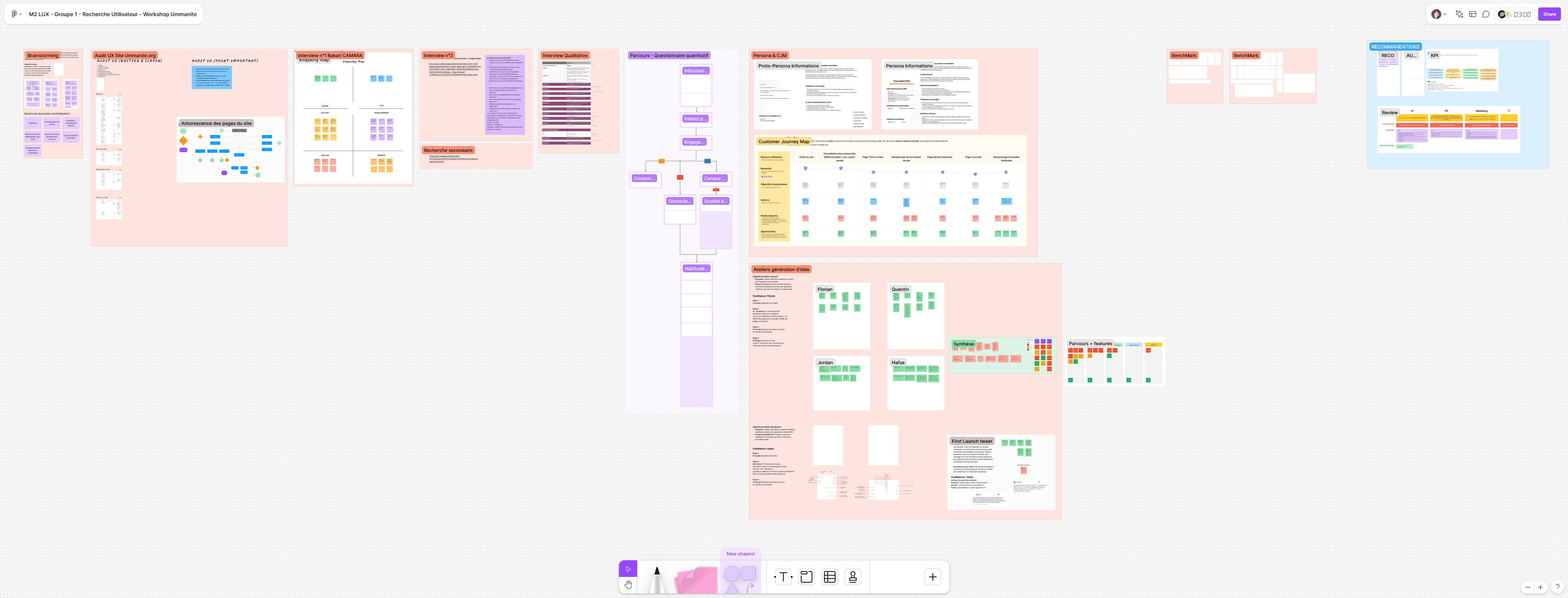
First of all, I sequenced and assigned tasks to the team members on a Kanban board (tool: Trello).
First of all, I sequenced and assigned tasks to the team members on a Kanban board (tool: Trello).
First of all, I sequenced and assigned tasks to the team members on a Kanban board (tool: Trello).
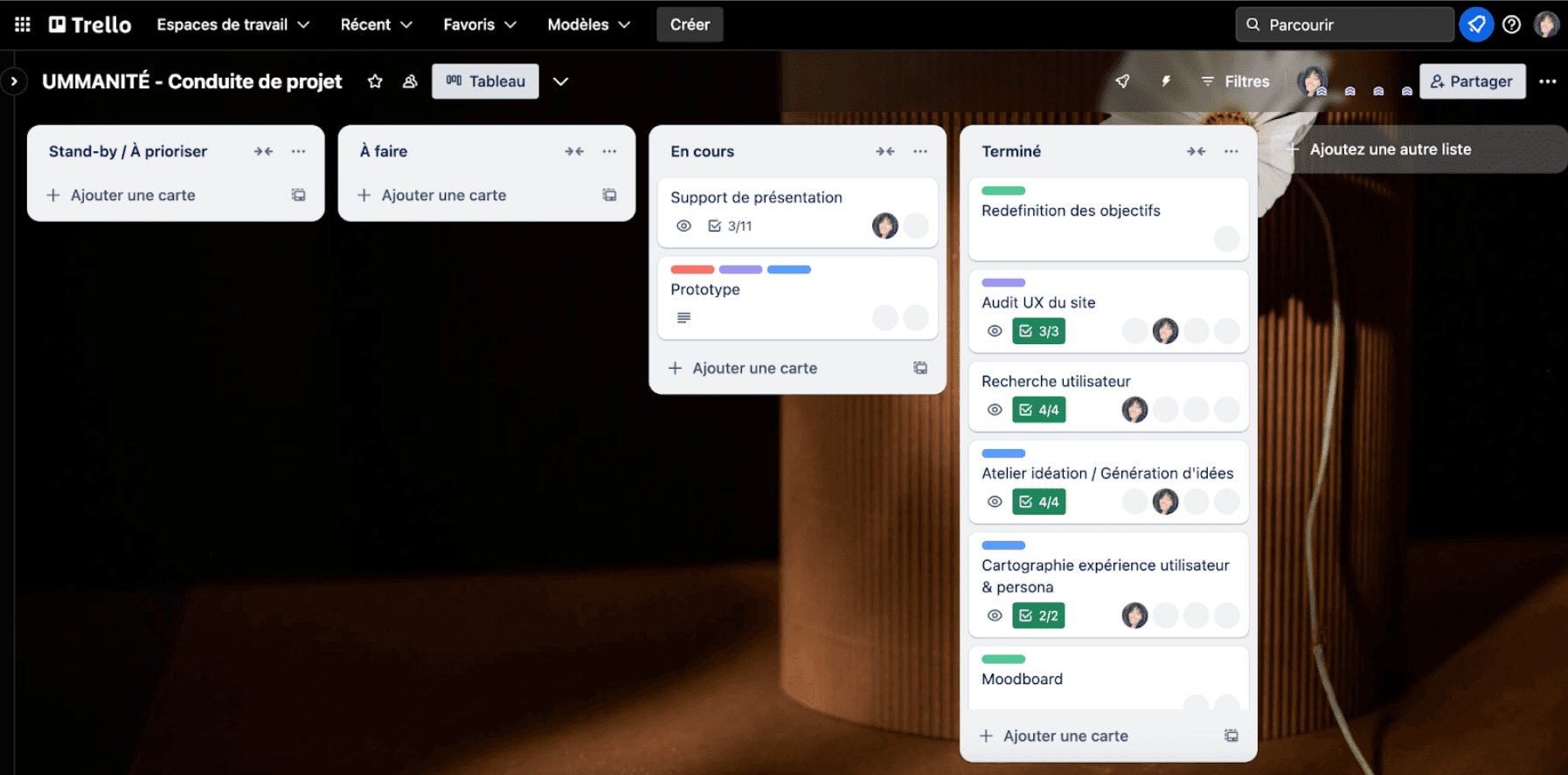
We conducted an analysis of the existing situation with a UX audit based on the Bastien & Scapin criteria of the Ummanité website (desktop and mobile). Since the site is more frequented by users on their phones, we focused on a mobile-first solution.
We conducted an analysis of the existing situation with a UX audit based on the Bastien & Scapin criteria of the Ummanité website (desktop and mobile). Since the site is more frequented by users on their phones, we focused on a mobile-first solution.
We conducted an analysis of the existing situation with a UX audit based on the Bastien & Scapin criteria of the Ummanité website (desktop and mobile). Since the site is more frequented by users on their phones, we focused on a mobile-first solution.
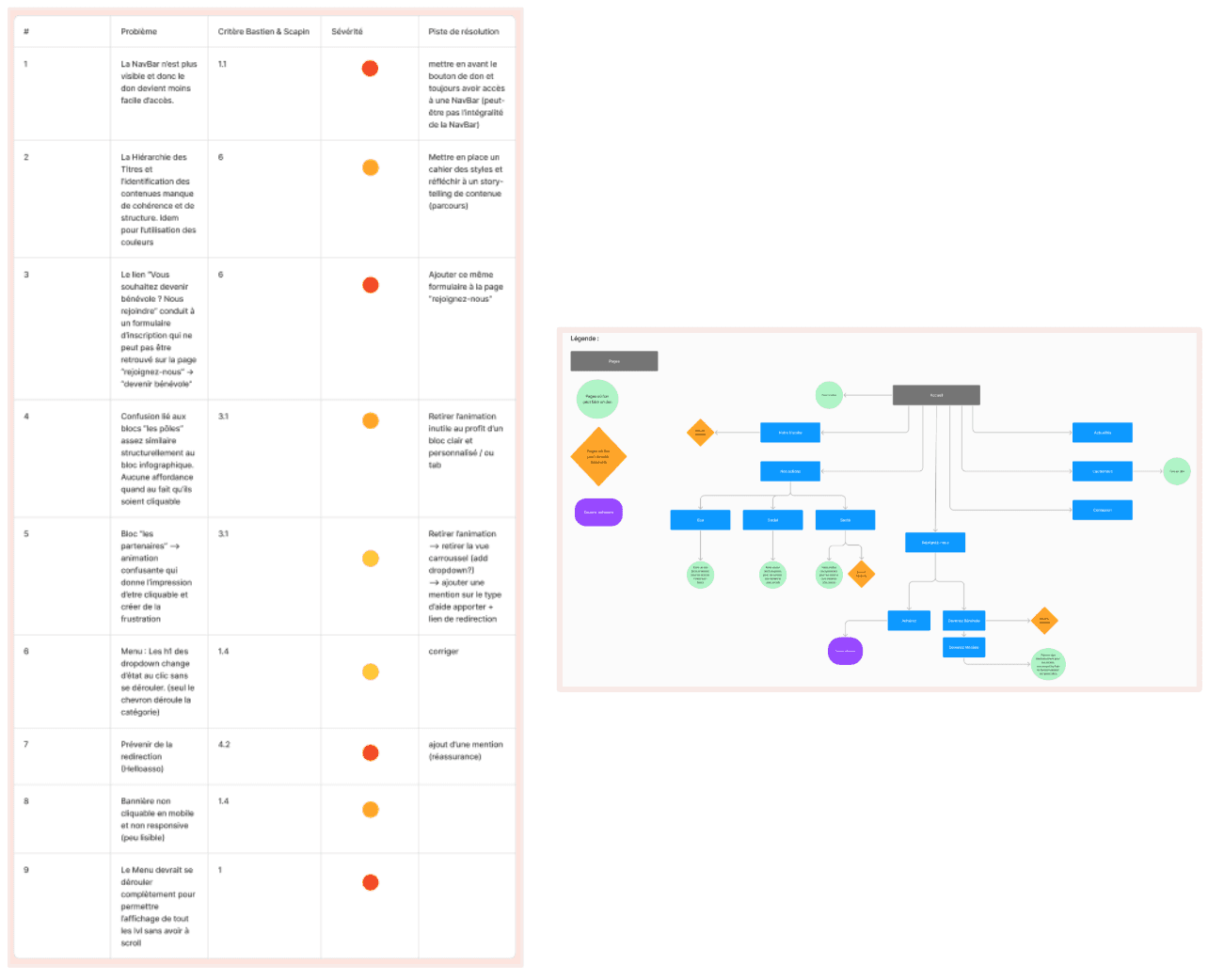
After framing our methodology (design sprint), we started the research phase:
Secondary research on donations in France: understand the motivations and habits of donors.
Primary research:
Questionnaire on donation habits towards humanitarian associations (43 respondents).
Interviews: three interviews conducted with volunteers from the NGO Ummanité and one with a regular donor from the Secours Populaire.

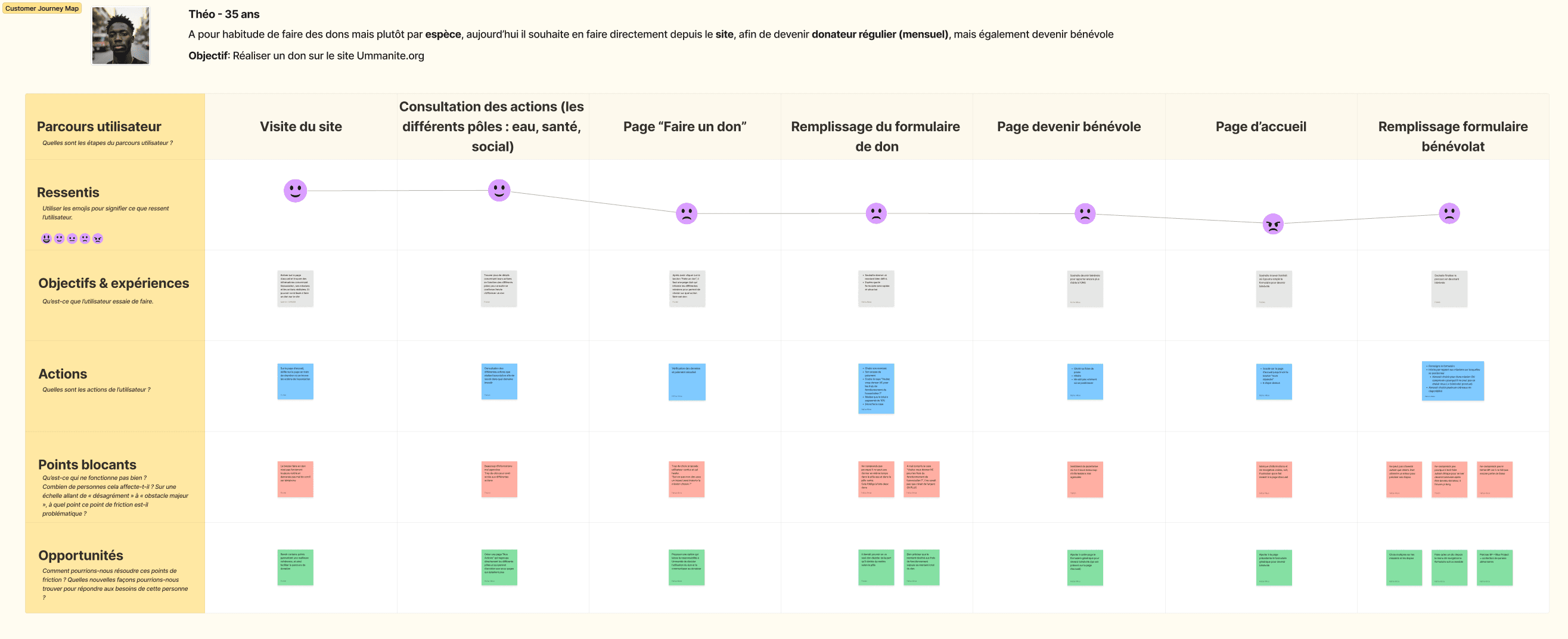
Synthesis of the research with the creation of a persona and its customer journey map.
After framing our methodology (design sprint), we started the research phase:
Secondary research on donations in France: understand the motivations and habits of donors.
Primary research:
Questionnaire on donation habits towards humanitarian associations (43 respondents).
Interviews: three interviews conducted with volunteers from the NGO Ummanité and one with a regular donor from the Secours Populaire.
Synthesis of the research with the creation of a persona and its customer journey map.
After framing our methodology (design sprint), we started the research phase:
Secondary research on donations in France: understand the motivations and habits of donors.
Primary research:
Questionnaire on donation habits towards humanitarian associations (43 respondents).
Interviews: three interviews conducted with volunteers from the NGO Ummanité and one with a regular donor from the Secours Populaire.
Synthesis of the research with the creation of a persona and its customer journey map.
ideation
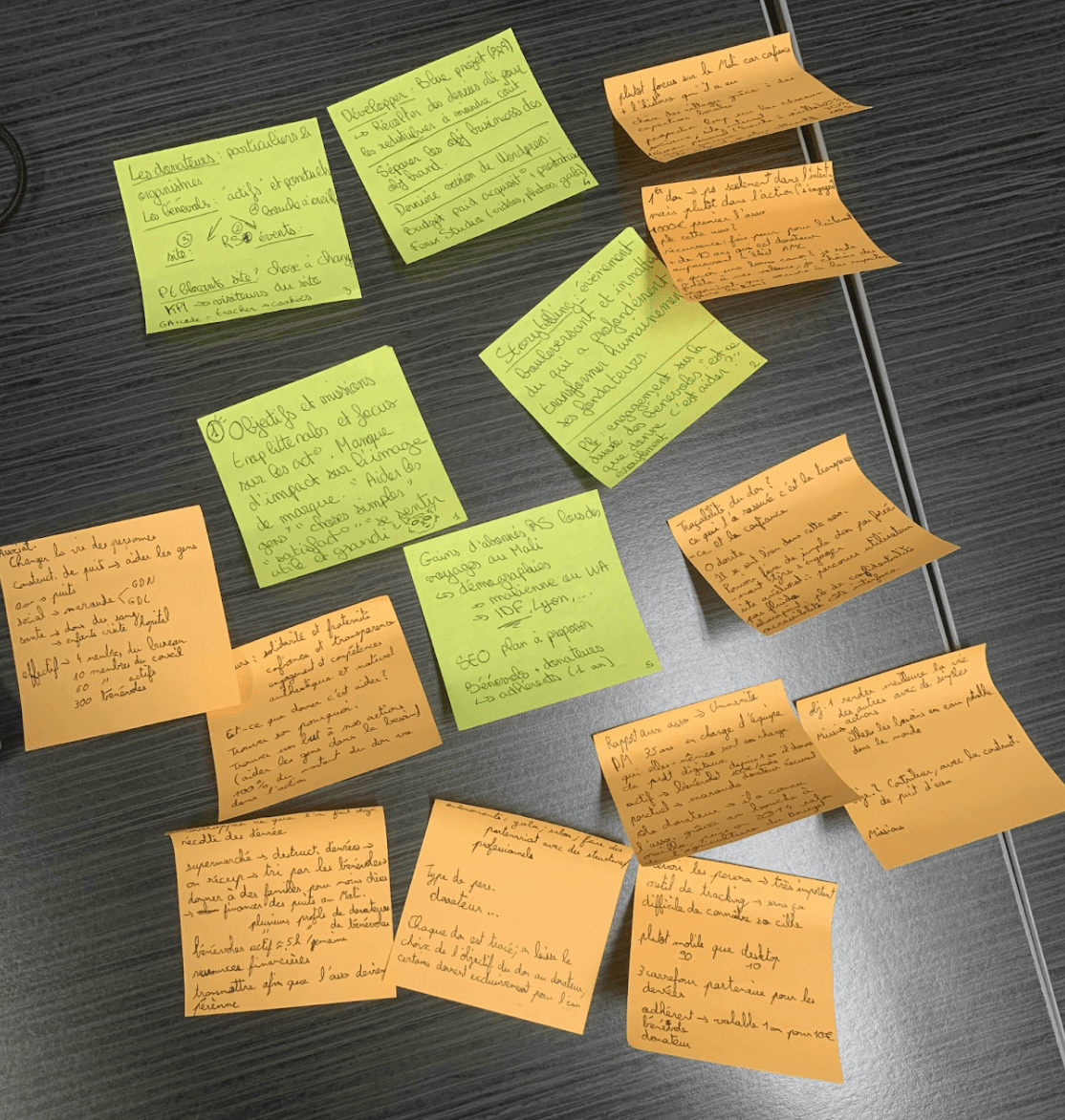
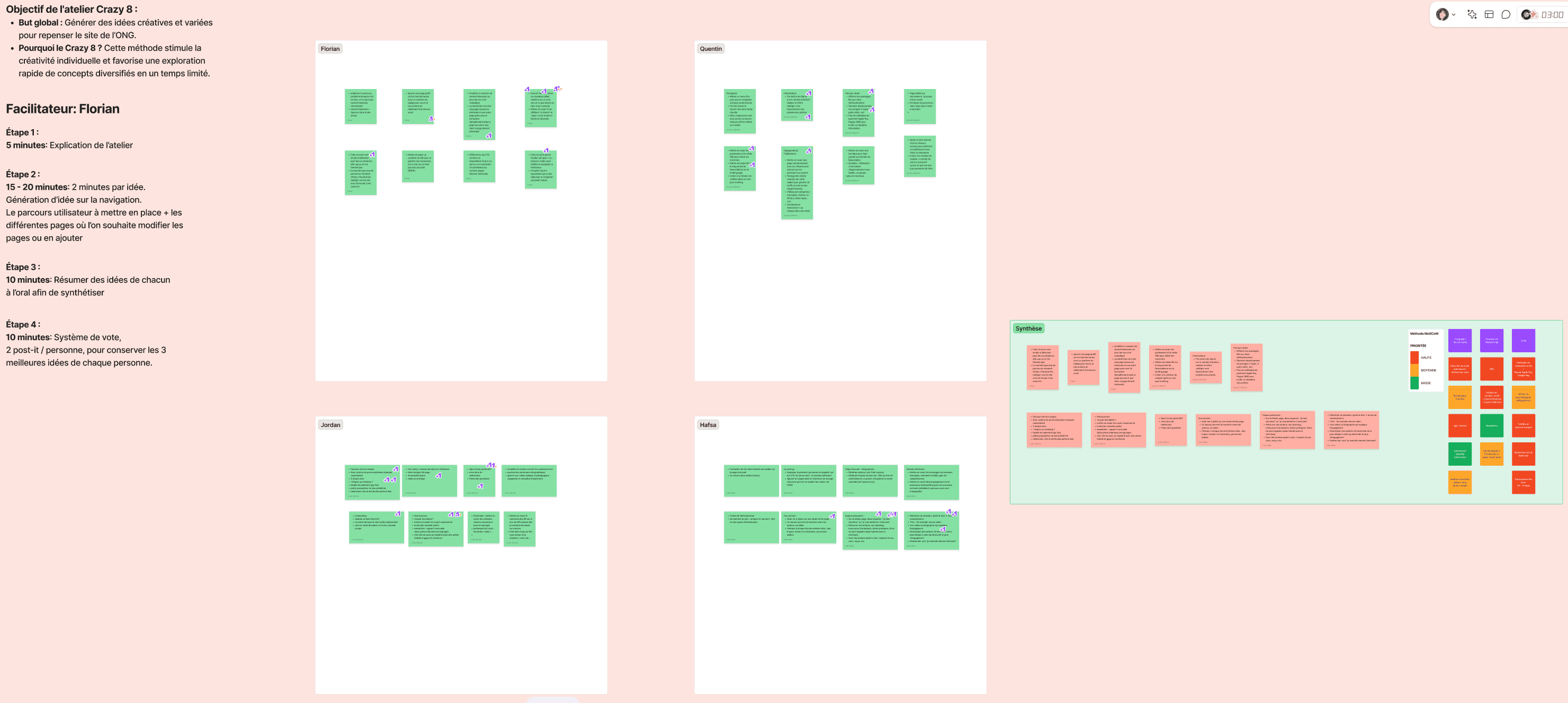
Objective - Outline potential solutions to the identified problem through the following three workshops:
Brainstorming – An open exchange of ideas to explore as many possible solutions as possible.
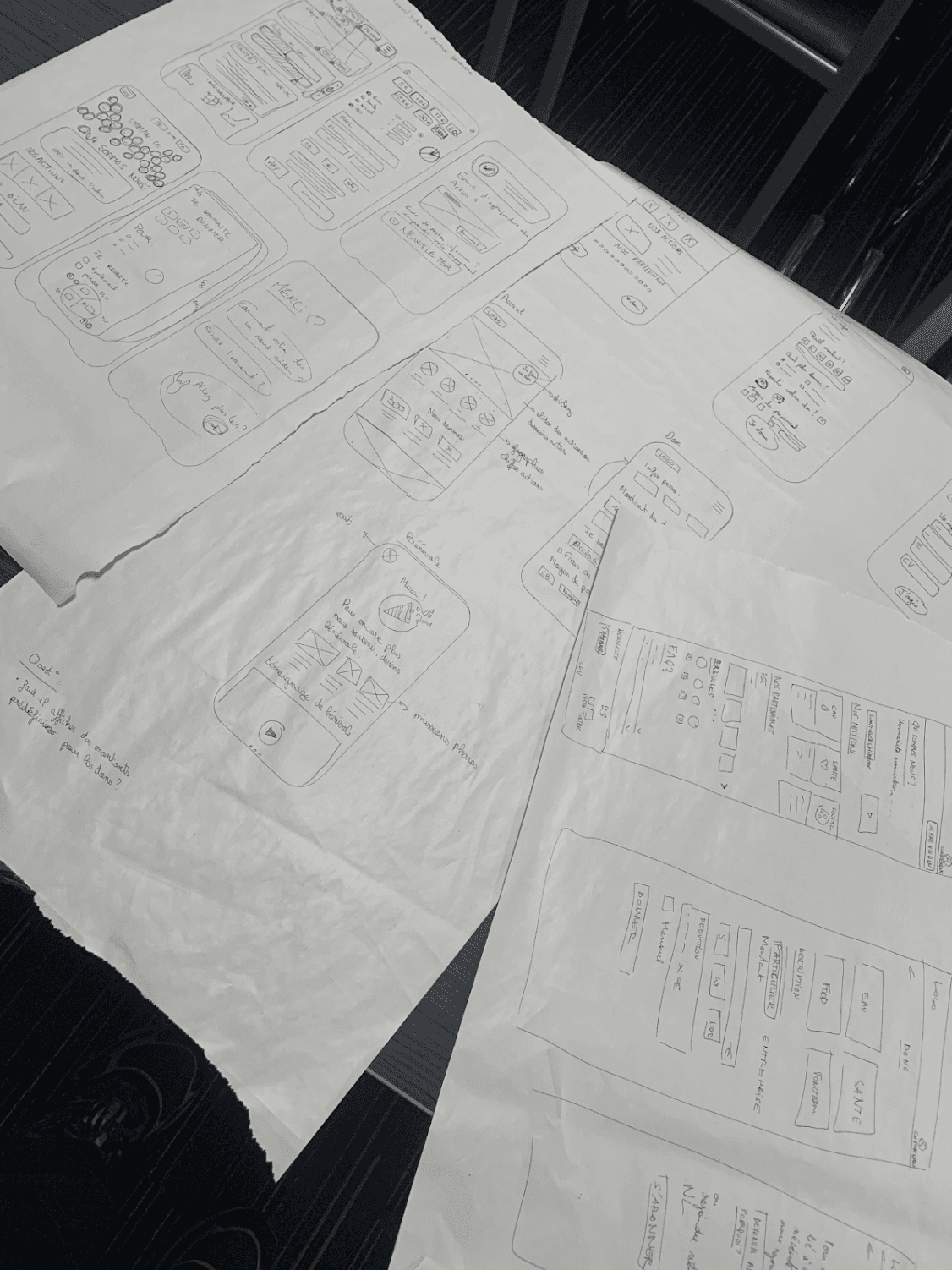
Crazy 8 – A quick sketching session to visualize and select the most promising concepts.
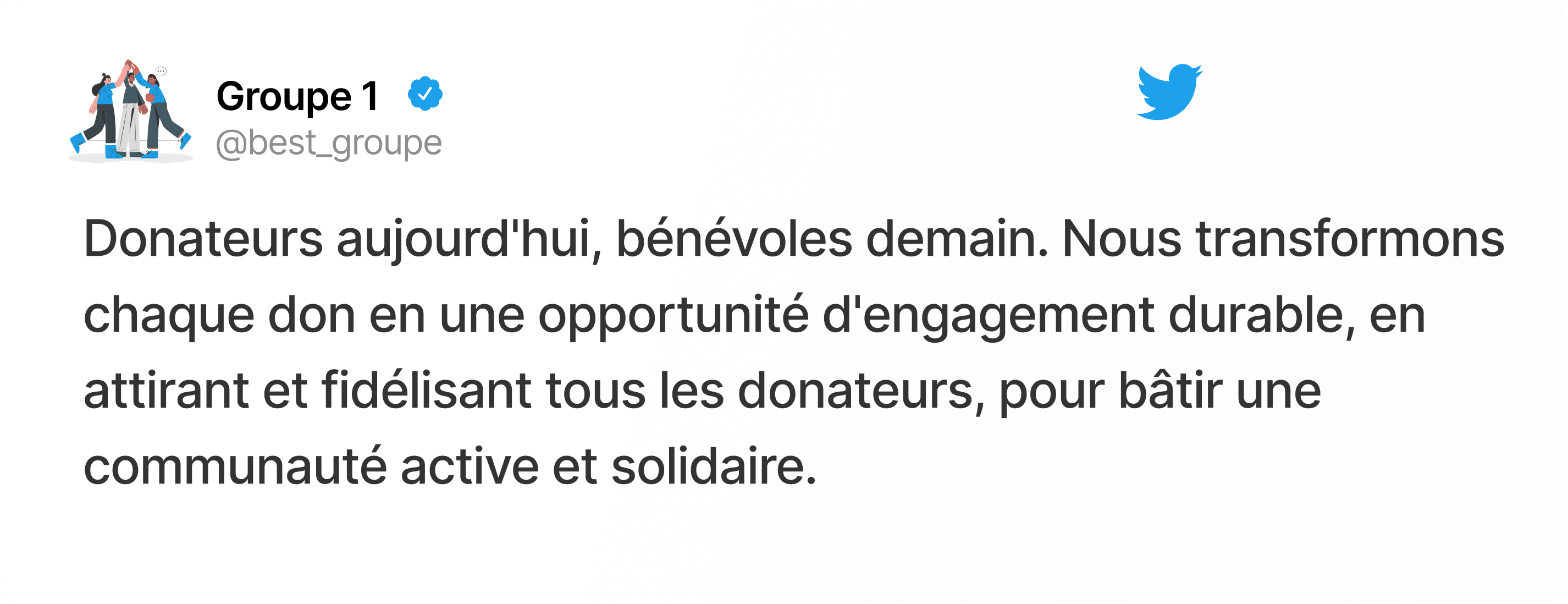
First Launch Tweet – A concise formulation to clarify the value and objective of the solution.
Objective - Outline potential solutions to the identified problem through the following three workshops:
Brainstorming – An open exchange of ideas to explore as many possible solutions as possible.
Crazy 8 – A quick sketching session to visualize and select the most promising concepts.
First Launch Tweet – A concise formulation to clarify the value and objective of the solution.
Objective - Outline potential solutions to the identified problem through the following three workshops:
Brainstorming – An open exchange of ideas to explore as many possible solutions as possible.
Crazy 8 – A quick sketching session to visualize and select the most promising concepts.
First Launch Tweet – A concise formulation to clarify the value and objective of the solution.
DESIGN
Objective - Define a clear and coherent vision of the solution through the following workshops:
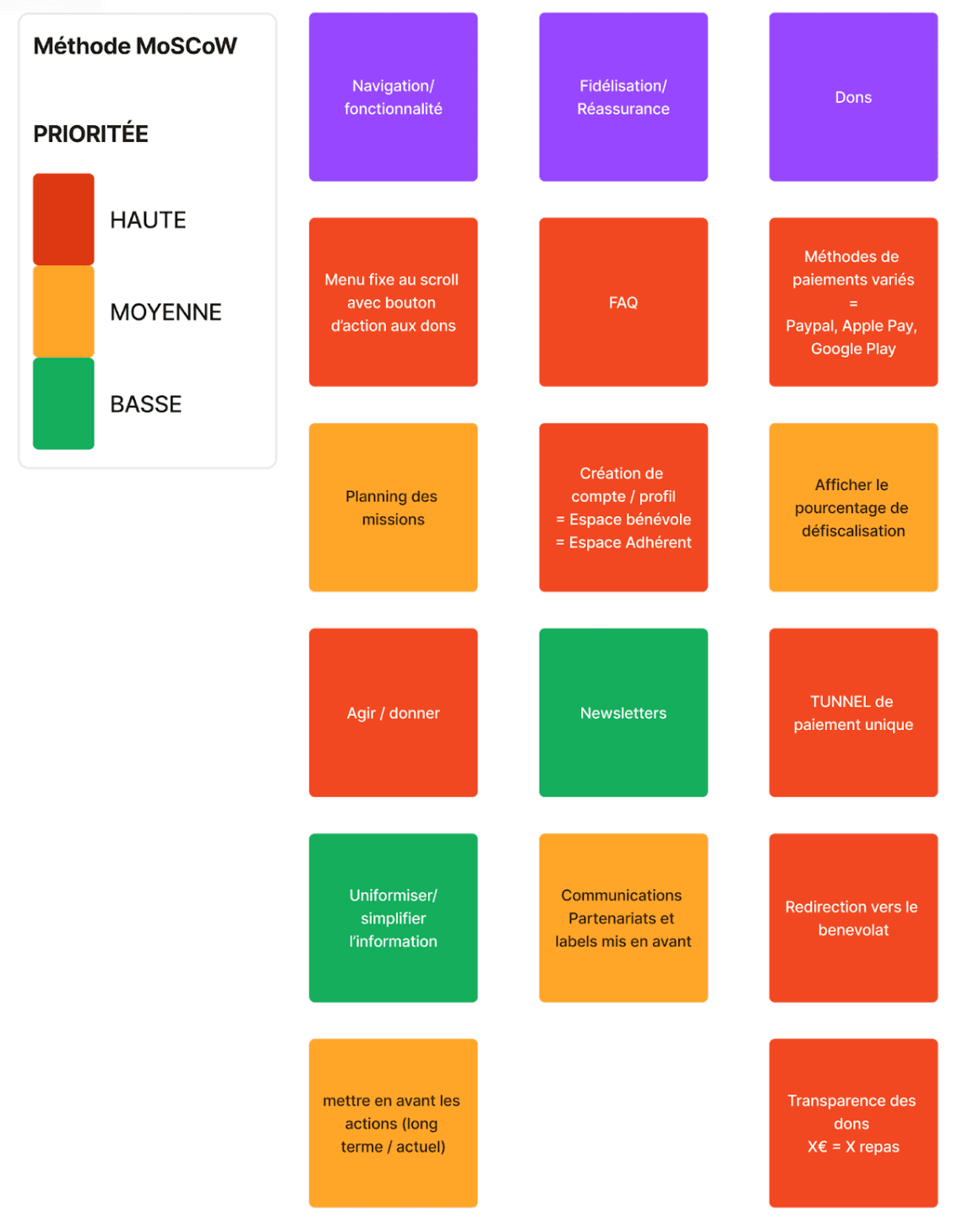
MoSCoW – Prioritization of essential features to frame the project.
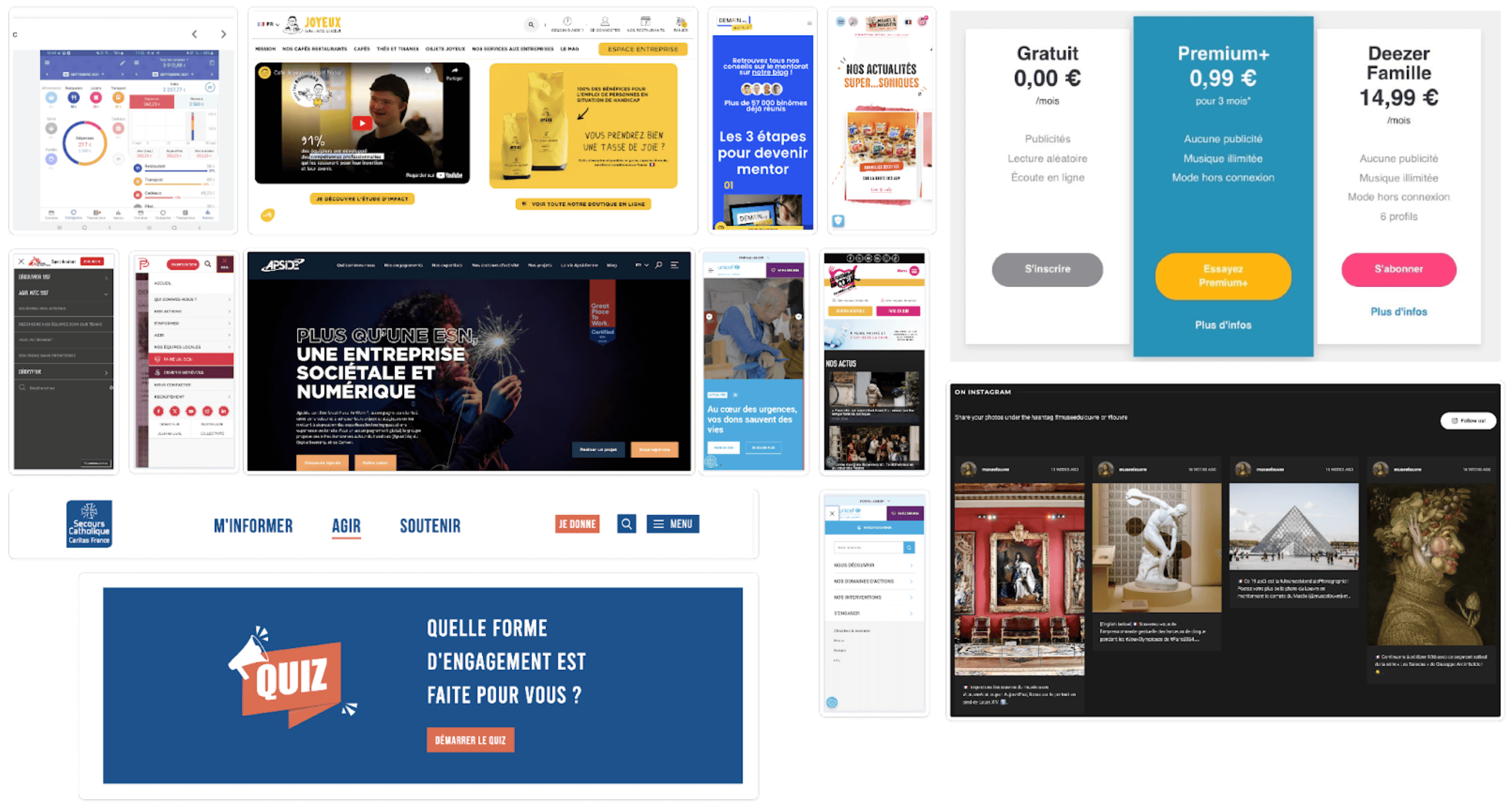
Moodboard – Creation of a visual universe aligned with the NGO's identity.
Storyboard – Staging of the user journeys to validate the proposed experience.
Objective - Define a clear and coherent vision of the solution through the following workshops:
MoSCoW – Prioritization of essential features to frame the project.
Moodboard – Creation of a visual universe aligned with the NGO's identity.
Storyboard – Staging of the user journeys to validate the proposed experience.
Objective - Define a clear and coherent vision of the solution through the following workshops:
MoSCoW – Prioritization of essential features to frame the project.
Moodboard – Creation of a visual universe aligned with the NGO's identity.
Storyboard – Staging of the user journeys to validate the proposed experience.
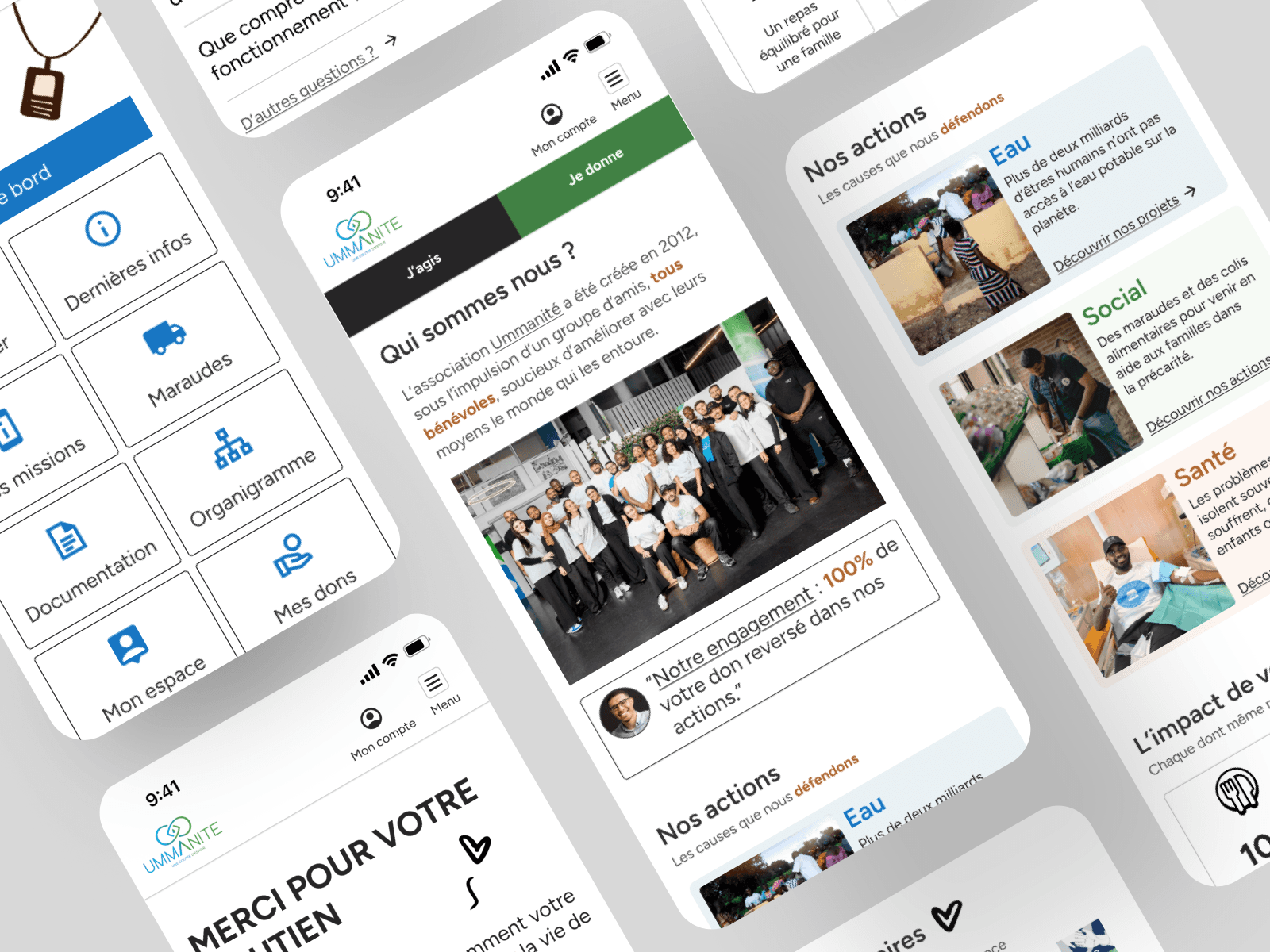
After prioritizing the features, defining a look & feel and determining the user journey, we were finally able to design our prototype!
After prioritizing the features, defining a look & feel and determining the user journey, we were finally able to design our prototype!
After prioritizing the features, defining a look & feel and determining the user journey, we were finally able to design our prototype!
Implementation
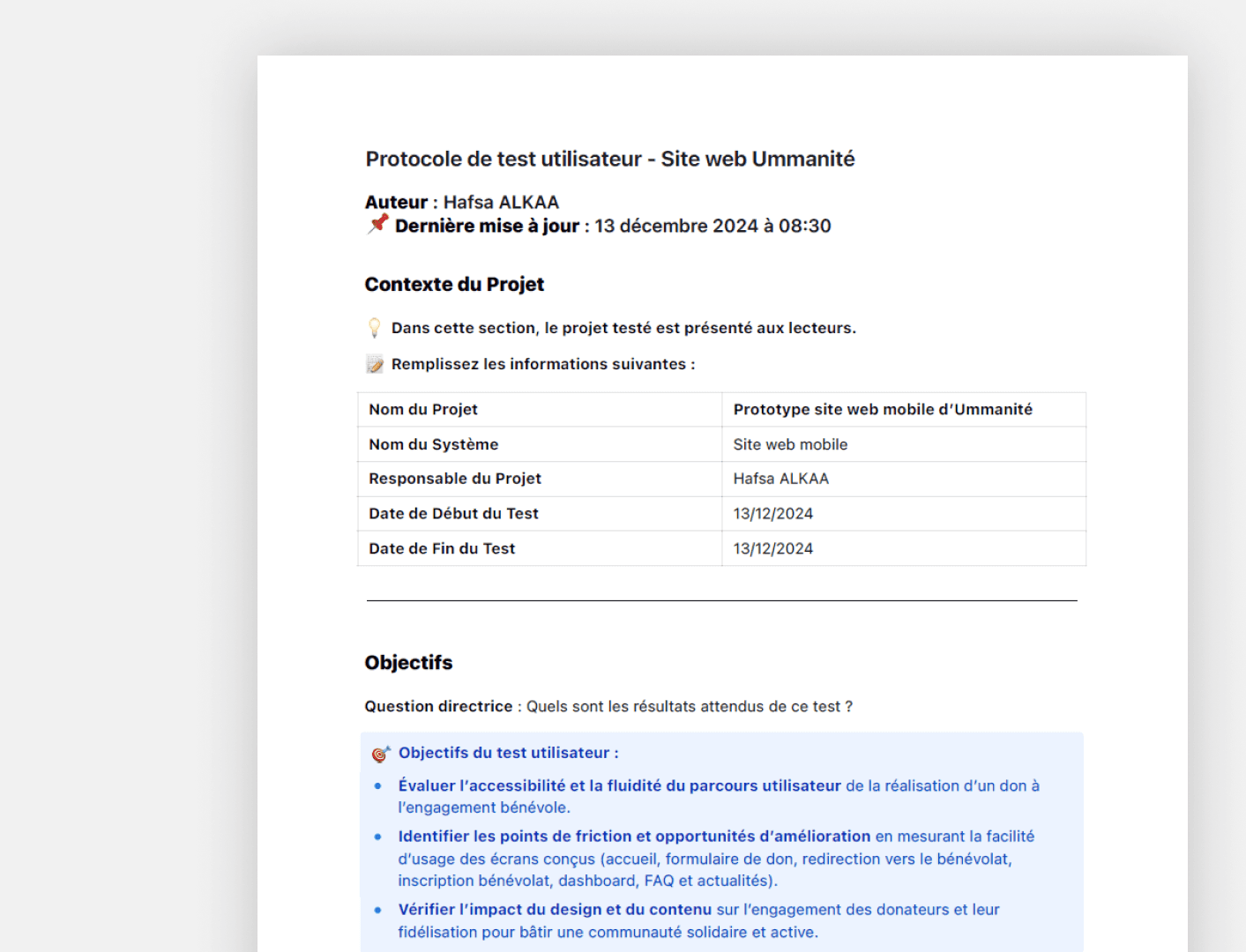
A user testing protocol has been established to evaluate the user experience of the mobile prototype and to ensure that the donation journey encourages sustainable engagement and promotes donor loyalty.
A user testing protocol has been established to evaluate the user experience of the mobile prototype and to ensure that the donation journey encourages sustainable engagement and promotes donor loyalty.
A user testing protocol has been established to evaluate the user experience of the mobile prototype and to ensure that the donation journey encourages sustainable engagement and promotes donor loyalty.